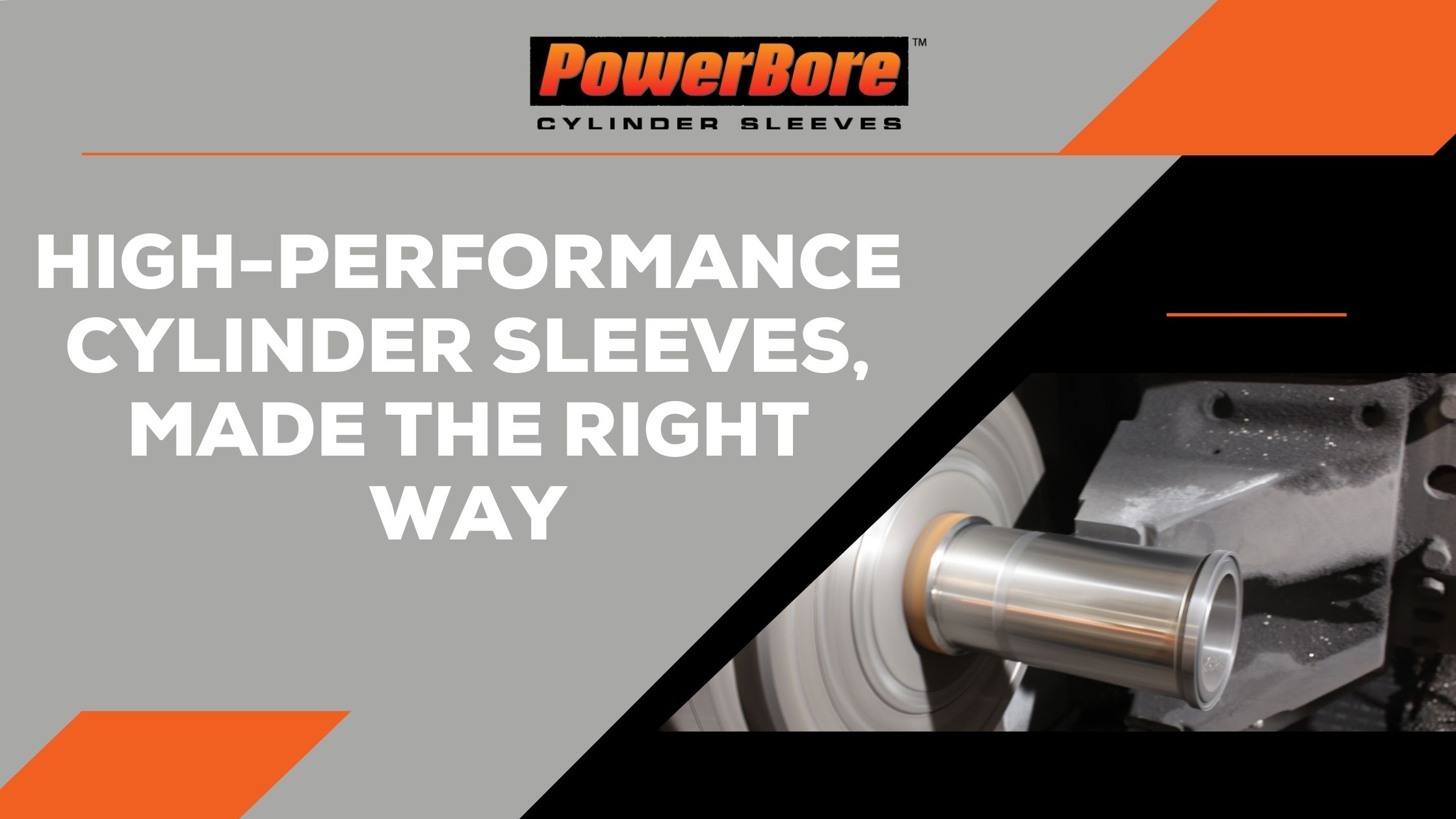
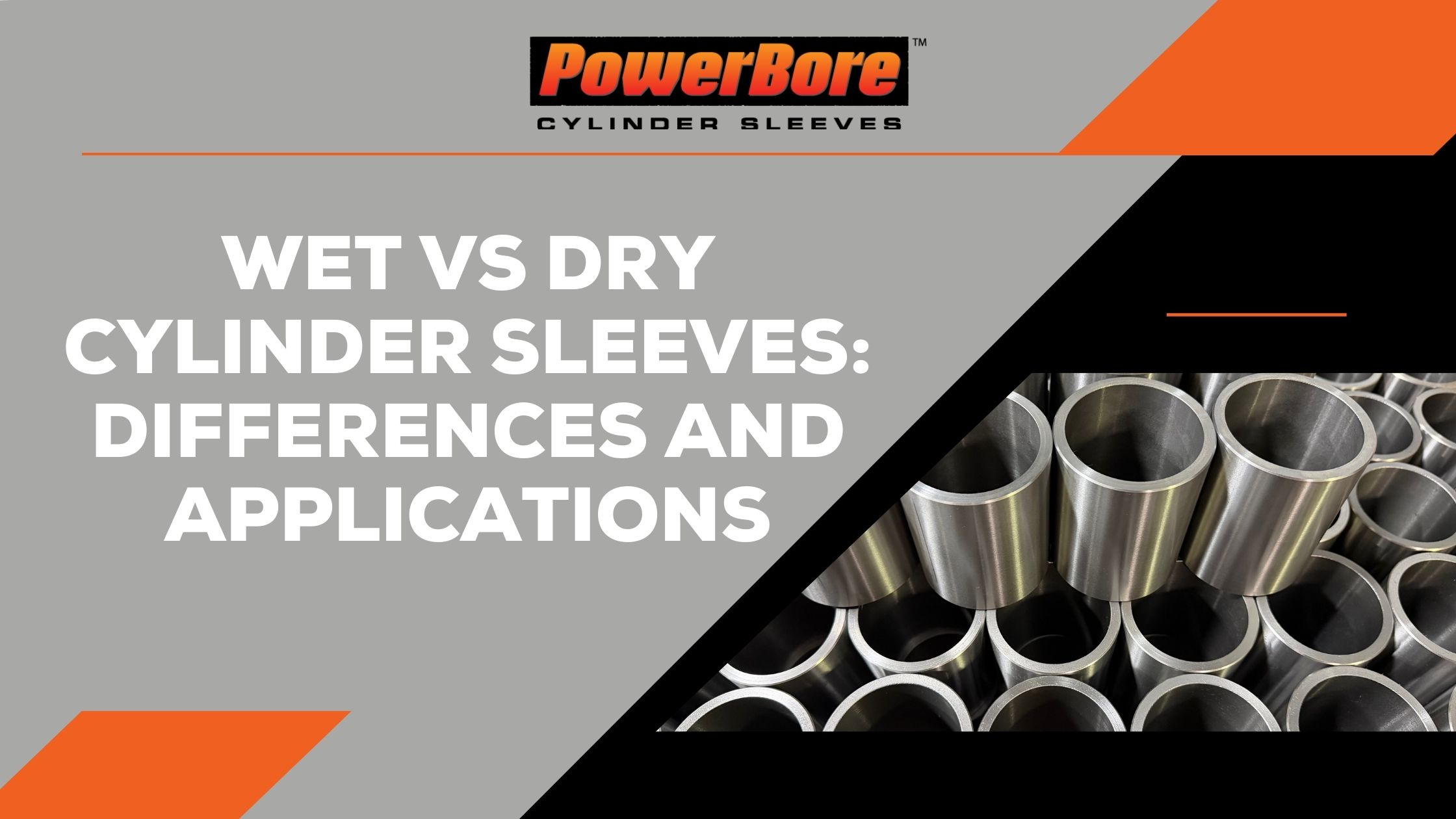
Cylinder sleeves play a critical role in modern engines by protecting the cylinder walls and providing a durable surface for piston movement. Whether repairing a damaged engine block or strengthening a high-performance build, sleeves allow engines to maintain precise tolerances under extreme heat and pressure.
Two primary types of cylinder sleeves are used in engines today: wet sleeves and dry sleeves. While both serve the same fundamental purpose, their design, cooling method, and applications differ significantly.
Understanding the differences between wet and dry cylinder sleeves helps engine builders, mechanics, and equipment operators choose the best solution for their engine’s performance and durability requirements.
What Are Cylinder Sleeves?
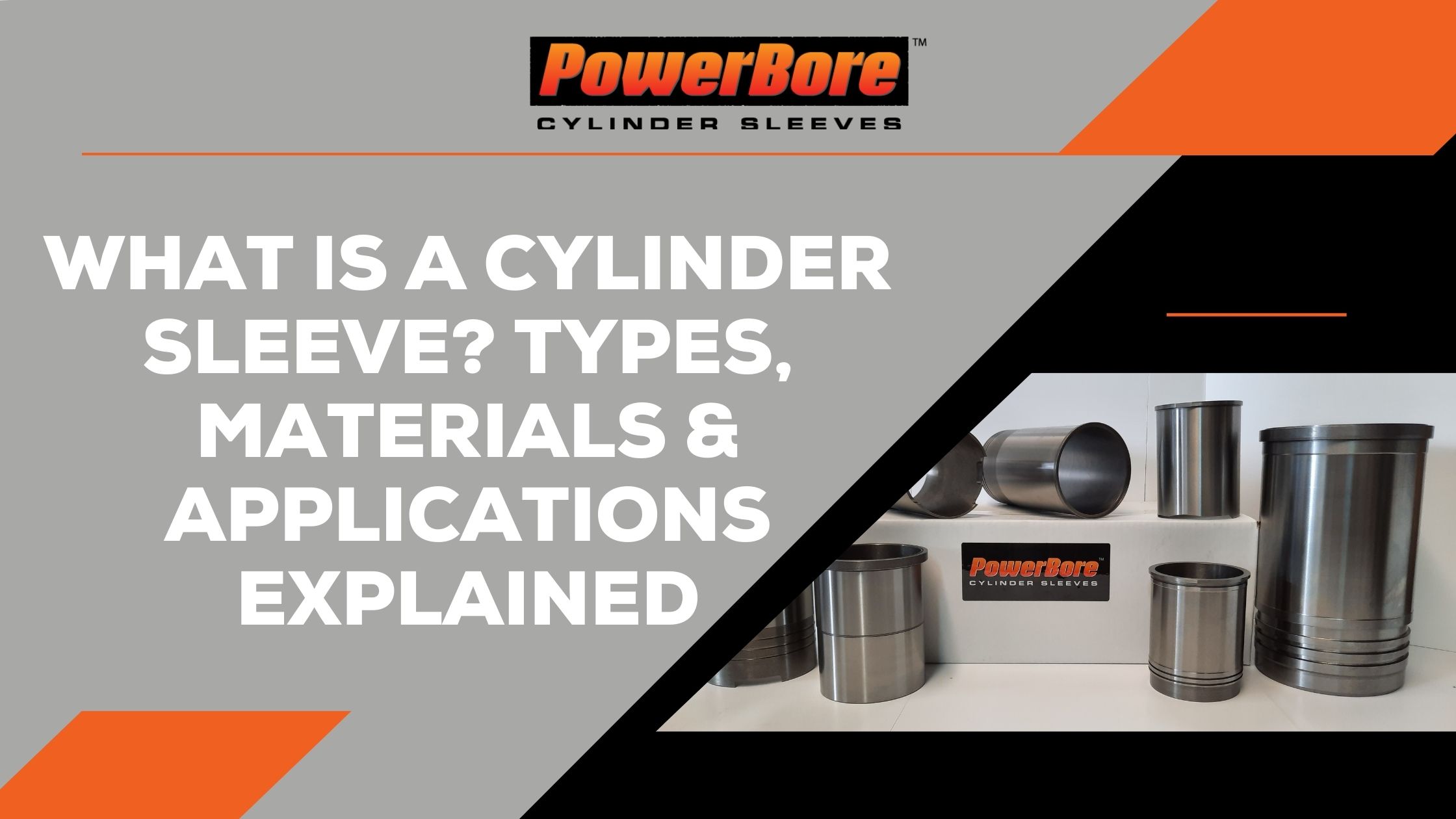
A cylinder sleeve, sometimes referred to as a cylinder liner, is a cylindrical metal component installed inside an engine block. It forms the internal wall of the combustion chamber and provides a hardened surface for the piston rings to move against.
Without a sleeve, the engine block itself would absorb the wear caused by combustion and piston movement. Over time, this would lead to excessive wear, compression loss, and engine failure.
By installing a cylinder sleeve, the engine block is protected while maintaining the tight tolerances required for efficient combustion and reliable performance.
What Are Wet Cylinder Sleeves?
Wet cylinder sleeves are designed to come into direct contact with engine coolant. The outer surface of the sleeve is exposed to the cooling system, allowing coolant to circulate around the cylinder wall.
Because they interact directly with coolant, wet sleeves rely on sealing components such as O-rings to prevent coolant from leaking into the crankcase.
This design allows wet sleeves to provide excellent heat transfer and cooling efficiency.
Wet sleeves are commonly used in:
- Heavy-duty diesel engines
- Agricultural equipment
- Industrial engines
- Large displacement engines designed for repeated rebuilding
In these applications, engines are often designed specifically to allow sleeves to be replaced during overhaul cycles, making maintenance easier and extending the engine’s lifespan.
Advantages of Wet Cylinder Sleeves
Wet cylinder sleeves offer several advantages, particularly in engines that operate under heavy loads for long periods of time.
One major advantage is improved cooling efficiency. Because coolant flows directly around the sleeve, heat generated during combustion is transferred away quickly. This helps maintain stable operating temperatures and reduces thermal stress on engine components.
Another benefit is ease of serviceability. Wet sleeve engines are often designed so sleeves can be removed and replaced without machining the engine block. This simplifies rebuilds and reduces downtime for large diesel engines used in industrial and agricultural equipment.
Wet sleeves also provide excellent thermal management, which is particularly important in high-compression diesel engines that produce significant heat during combustion.
What Are Dry Cylinder Sleeves?
Dry cylinder sleeves are installed into the engine block using a press-fit or interference fit. Unlike wet sleeves, dry sleeves are fully surrounded by the engine block material and do not come into direct contact with coolant.
Instead, heat from the combustion chamber must transfer through the sleeve and then into the surrounding block before reaching the cooling system.
Dry sleeves are extremely common in:
- Gasoline engines
- High-performance racing engines
- Automotive rebuilds
- Performance upgrades
Because dry sleeves are tightly supported by the engine block, they provide exceptional structural strength and rigidity. This makes them ideal for engines that experience high RPM or elevated cylinder pressures.
Advantages of Dry Cylinder Sleeves
Dry sleeves are widely used because they reinforce the engine block while maintaining excellent durability.
One of their biggest advantages is structural support. Since the sleeve is fully surrounded by the block material, it becomes an integrated part of the block structure. This added rigidity helps prevent cylinder distortion in high-performance engines.
Dry sleeves also allow engine builders to repair damaged cylinders without replacing the entire block. When a cylinder wall becomes cracked or worn, the damaged area can be machined out and replaced with a sleeve, restoring the engine’s integrity.
In performance engines, dry sleeves are frequently used when increasing displacement or strengthening blocks for turbocharged or high-compression builds.
Key Differences Between Wet and Dry Sleeves
While both sleeve types protect cylinder walls, their design differences affect cooling, installation, and typical applications.
Wet sleeves prioritize cooling efficiency and rebuild serviceability, making them ideal for large diesel engines that require frequent overhauls.
Dry sleeves emphasize structural strength and block reinforcement, which makes them a preferred choice for gasoline engines and performance builds.
The choice between the two ultimately depends on engine design and intended use.
Why Sleeve Quality Matters
Regardless of whether an engine uses wet or dry sleeves, manufacturing quality plays a critical role in durability and performance.
High-quality cylinder sleeves must maintain precise dimensional tolerances and consistent metallurgical properties. Poorly manufactured sleeves may suffer from uneven hardness, reduced wear resistance, or thermal instability under load.
At PowerBore, cylinder sleeves are manufactured entirely in-house, including the foundry process. Controlling the casting process allows for tighter material consistency and greater quality control throughout production.
By managing melt chemistry, casting conditions, and machining operations internally, manufacturers can produce sleeves that perform reliably in demanding engine environments.
Choosing the Right Sleeve for Your Engine
Selecting the correct cylinder sleeve depends on the design of the engine and the demands placed upon it.
Heavy-duty diesel engines often rely on wet sleeves to maximize cooling and simplify rebuild procedures. These engines are built for longevity and repeated service cycles.
Automotive and performance engines frequently use dry sleeves because they strengthen the block and allow for performance upgrades such as increased displacement or boosted power levels.
Understanding these differences helps engine builders and technicians determine the most effective solution for both repair and performance applications.
Final Thoughts
Cylinder sleeves are a vital component in modern engine design and rebuilding. Whether used to repair damaged cylinder walls or strengthen engines for extreme performance, sleeves protect the engine block while maintaining the precise tolerances required for efficient combustion.
Wet sleeves and dry sleeves each serve unique roles depending on the engine’s design and operating conditions. By understanding their differences and advantages, engine builders and operators can make informed decisions that improve engine durability, reliability, and performance.